New patients! Your check-up is £75, for a limited time only
That's up to 45 minutes with our dentist, digital X-rays if you need them, and a thorough check to catch small things early. Our standard fee is £120. Ask us about our whitening offers too.
No thanks, I'll pay the full £120
If you've lost a tooth, or you're tired of a denture that shifts when you eat, dental implants in Wellingborough are worth understanding properly before you rule them out. Plenty of people put off looking into it because they imagine months of appointments, or a procedure that sounds more frightening than it is. Once you know what actually happens, from the first conversation with our treatment coordinator through to the day your new tooth is fitted, the whole process feels a lot more manageable.
This guide walks through each stage of implant treatment at our Wellingborough practice, who is involved in your care, and roughly what to expect on cost. There's no pressure here, just the information you need to decide whether it's the right next step for you.
Key takeaways
- Two implant surgeons work from our Wellingborough clinic, including Hemal, whose implant and sedation work has been recognised with industry awards.
- We use the Straumann implant system, one of the most widely researched brands in the industry.
- Your journey runs from an initial consultation, through a CBCT scan, to placement and a follow up review.
- Payment plans, including 0% interest finance, are available so the cost can be spread rather than paid in one go.
- We treat implant patients from across Wellingborough, Rushden, Higham Ferrers, Irthlingborough and Northampton.
What a dental implant actually replaces
A missing tooth is more than a gap you can see in the mirror. Underneath the gum, the jawbone that used to support that tooth starts to shrink away once there's nothing left to hold it in place. A denture or a bridge sits on top of the problem; a dental implant addresses it directly.
An implant is a small titanium post that's placed into the jaw, standing in for the root of the tooth you've lost. Once it has settled and bonded with the bone, a crown is fitted on top, shaped and shaded to match your other teeth. The result looks, feels and functions like a natural tooth, and because the bone has something to hold onto again, it stops the shrinking process that loose-fitting dentures can't prevent.
Who carries out implant treatment at our Wellingborough practice
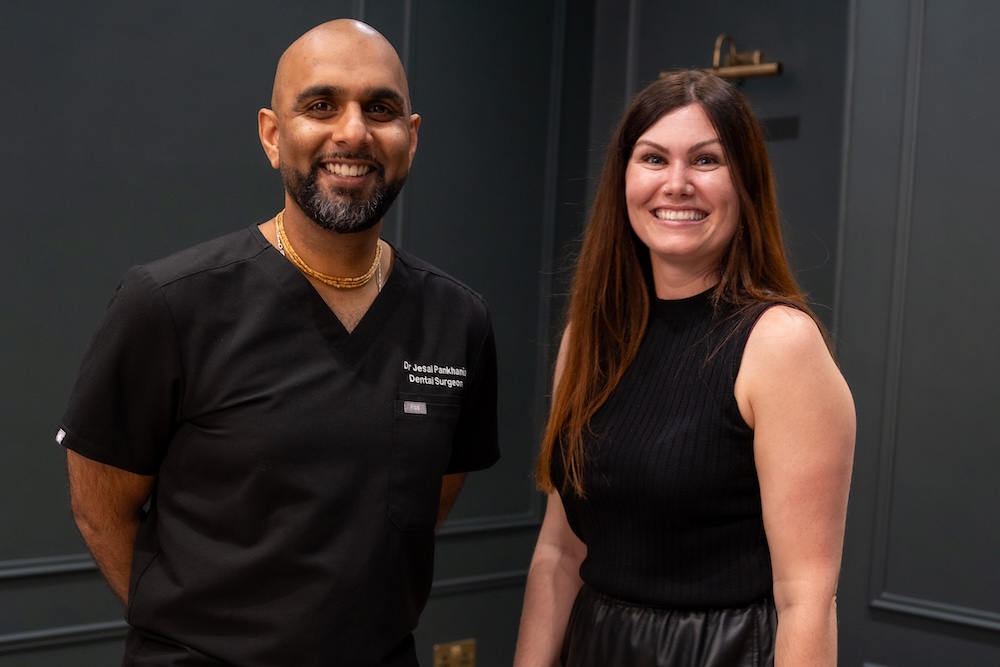
Implant treatment at our Wellingborough practice is led by two implant surgeons, so there's rarely a long wait to get the specialist input your case needs. One of them, Hemal, also carries out perio and sedation work and has been recognised with industry awards for it, which matters if you're the sort of patient who wants reassurance that the person holding the drill actually knows what they're doing.
We place implants using the Straumann system, and can offer the full range of options that come with it rather than a single one-size-fits-all approach, so your treatment isn't squeezed into whichever option happens to be easiest for us.
Your first appointment: the implant patient journey, step by step
The process is more structured than most people expect, which is deliberate. Rushing a treatment plan for something as permanent as an implant helps nobody.
- You'll start with an initial appointment with our treatment coordinator, booked online, followed by a refundable £30 deposit to secure your slot.
- Once you're happy with the costings you've been given, you'll be booked into the dentist's diary for a proper implant consultation, which usually runs for thirty to forty minutes.
- At this stage we take a CBCT scan, a detailed 3D x-ray that shows exactly how much bone is available and where the implant needs to sit. We're actively working towards offering this on the same day as your consultation, rather than asking you to come back for it.
- Your treatment plan is then built and talked through with you in plain language, covering timings, costs and what to expect at each stage.
- Once you're ready to proceed, you'll be booked in for consent and implant placement.
- A review appointment follows placement, so we can check everything is healing as it should before the final crown is fitted.
What dental implants cost, and how to spread the payment
Cost is usually the first question people ask, and it's a fair one. The honest answer is that it depends on how many teeth need replacing and what your treatment plan involves, so we'd rather give you an accurate figure at your consultation than a rough number that turns out to be wrong.
What we can tell you is that treatment starts with a refundable £30 deposit rather than a large upfront payment, and we offer 0% interest finance over 18 months to help spread the cost from there, with longer interest bearing options also available. If budgeting is the main thing holding you back, it's worth having that conversation with the team before assuming implants are out of reach.
Why a single missing tooth is worth treating properly
It's tempting to leave a gap alone if it's somewhere nobody else notices, especially towards the back of the mouth. The trouble is that neighbouring teeth don't stay put once there's a space next to them. They tilt slowly into the gap over months and years, which can throw off your bite and make the neighbouring teeth harder to clean properly. The tooth opposite the gap can also over-erupt, growing slightly longer because there's nothing to meet it anymore.
None of this happens overnight, which is exactly why it's easy to put off. A single implant, fitted while the surrounding teeth are still in good shape, is a far simpler job than one dealt with years later once other teeth have shifted and started causing problems of their own.
Looking after your implant once it's fitted
A dental implant itself can't develop decay in the way a natural tooth can, since the crown is fixed to a titanium post rather than living tissue. That doesn't mean it looks after itself, though. The gum around an implant still needs the same care as your natural teeth, and issues like peri-implantitis, a gum condition specific to implants, can develop if plaque is left to build up around the base.
Regular hygiene appointments and your normal check-ups both play a part in keeping an implant in good condition for years to come, so it's worth treating it as part of your ongoing routine rather than a one-off fix you can forget about.
Serving patients across Wellingborough and the surrounding towns
Most of the patients we see for implant treatment come from Wellingborough itself, with a good number travelling in from Rushden, Higham Ferrers, Irthlingborough and Northampton. The practice has free onsite parking, and the building is wheelchair accessible, including the car park, entrance, seating areas and toilets, so getting to your appointments shouldn't be the difficult part.
Ready to take the next step?
If you've been putting off dealing with a missing tooth, or you're simply curious about whether implants would suit your situation, get in touch and we'll book you in with our treatment coordinator. You can call us on
01933 558733
or email hello@wellingboroughdentists.co.uk to arrange your consultation.
Frequently asked questions
How long does implant treatment take from start to finish?
It varies by case, but you should expect several months between your first consultation and the final crown being fitted, since the implant needs time to bond with the jawbone before it can safely support a crown. Your treatment plan will give you a realistic timeline for your specific situation, and your dentist will explain exactly why each stage takes as long as it does.
Does getting a dental implant hurt?
The placement itself is carried out under local anaesthetic, so you shouldn't feel pain during the procedure. Some soreness afterwards is normal, similar to what you'd expect after a tooth extraction, and it settles within a few days for most patients. If you're particularly anxious about the procedure, it's worth asking about IV sedation at your consultation.
Am I too old for a dental implant?
There's no upper age limit for implant treatment. What matters far more is whether you have enough healthy bone to support the implant and whether any underlying health conditions need managing first, both of which we'll assess at your consultation.
What happens if I'm not suitable for an implant straight away?
Sometimes there isn't enough bone left to place an implant immediately, particularly if a tooth has been missing for a long time. This doesn't rule implants out; it usually just means an additional step is needed first, which your dentist will talk you through, along with how it affects your overall timeline.
Can I replace more than one tooth with implants?
Yes, implants can be used to replace a single tooth, several teeth, or to support a full arch of replacement teeth, depending on your situation. Your treatment plan will be built around exactly what you need rather than a one-size-fits-all approach.
Become a member today
Join our Kettering dental membership plan and take the first step towards a healthier, brighter smile.